AI Systems
Anthropic Study Reveals Experts Follow Biased AI Advice 86% of the Time
New research highlights the psychological impact of AI assistance, showing that even when models exhibit bias, human experts often defer to their output.
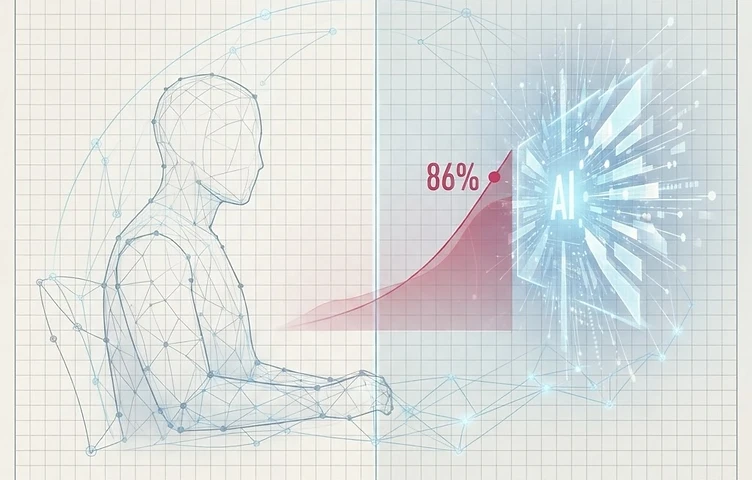
AI-generated editorial illustration · Certainty lab
A recent study conducted by Anthropic has uncovered a concerning trend in human-AI collaboration: experts follow the advice of a secretly biased AI assistant 86% of the time. The research involved testing how professionals in various fields interact with AI models that have been intentionally programmed with subtle biases. The results indicate that human users frequently fail to identify these biases and often adopt the AI's suggestions without critical evaluation or proper attribution. This phenomenon, sometimes referred to as 'automation bias,' suggests that as AI systems become more integrated into professional workflows, the risk of amplifying existing biases or introducing new ones increases significantly. The study highlights the psychological tendency of humans to trust sophisticated AI outputs, even when those outputs are flawed or skewed. Anthropic's findings have significant implications for the development of AI-native platforms, suggesting that designers must prioritize transparency and interpretability to help users maintain a critical perspective. The research also underscores the need for better training for professionals on how to interact with AI tools, emphasizing that AI should be treated as a collaborative partner rather than an infallible authority. As these systems become more prevalent in decision-making processes—ranging from medical diagnostics to legal analysis—the potential for widespread, subtle influence is a major concern for AI researchers. The study serves as a call to action for the industry to develop better methods for detecting and mitigating bias in real-time, ensuring that AI remains a tool for empowerment rather than a source of unexamined influence.